
Nvidia Scandal Could Buy Sports Teams Time to Manage AI Disruption
By Jacob Feldman, Sportico 5 min read
It’s been a turbulent few weeks to be an AI titan.
… OK, truly it’s been a chaotic few years at the forefront of AI adoption—but the most recent stretch has been particularly dramatic.
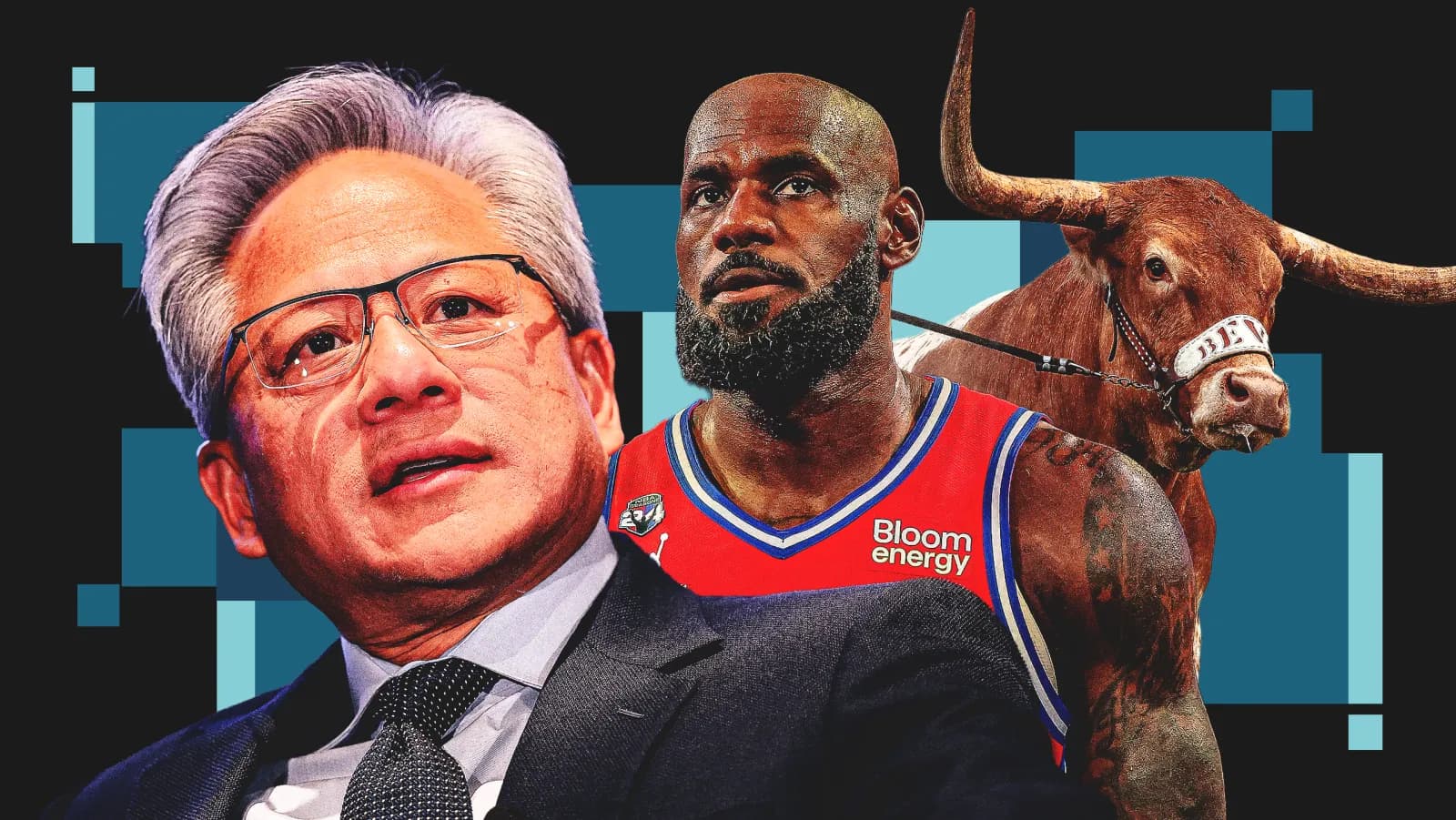
Tech companies have faced an increase in AI-related cybersecurity risks on top of pushback from midterm voters who opposed further data center build-outs. Then, Nvidia CEO Jensen Huang resigned last week following stories of inappropriate romantic relationships with a woman who U.S. agencies reportedly believe was spying for China, as well as with another woman who worked under Huang.
Nvidia not only provides critical hardware to AI companies, but it also offered funding for smaller tech providers. In recent months, the firm also expanded its sports work, designing tools to enhance game broadcasts. Once the world’s most valuable company, Nvidia’s stock price drop 25% over the last month, but it’s not alone among giants feeling the hurt. Meta and Google parent Alphabet have lost roughly 15% of their value over that same period.
Most financial analysts see Huang’s exit as a temporary setback for the company rather than an industry-wide threat. All eyes this week will be on Anthropic’s much-anticipated debut as a public company on Nasdaq Thursday as a broader litmus test for AI.
Still, as AI shocks to the system have piled up, a potential slowdown for AI’s business penetration might not be such a bad thing for the sports world.
While the appeal of live sports might be “AI-proof,” the reality of running teams and leagues has meant juggling challenges and opportunities with each new model release. If the pace of development slows or the cost of inference rises, that could give operators just enough time to manage the disruptions.
Leagues, teams and players have been pulled into AI-driven instability in recent months. LeBron James’ representatives were forced to act when AI was used to seemingly recreate his likeness in an ad for a startup the 76ers star had no official affiliation with. Rogue agents and newly exploitable web vulnerabilities, meanwhile, pose threats to any sports org with a URL.
In cases of more traditional business disruption, properties have had to respond to user behavior shifting from old-school web searches to AI-generated answers. Now, deputized AI agents are pulling data and making purchases directly for users through tools such as Meta’s Muse chatbot.
And yet, the causes for potential worry haven’t prevented sports leaders from signing deals with AI companies, whether those be jersey patch sponsorships or business tool contracts for off-the-field applications. Coaches and players are getting in on the act as well. The University of Texas recently launched Bevo Lab to deliver AI-driven research to its teams and athletes.
“The upheaval should make sports organizations more deliberate about where they invest and who they rely on,” said Shripal Shah, the chief AI and innovation officer at consulting company Next League. “It shouldn’t make them stop.”
Among many sports orgs adopting AI, NASCAR hired its first director of artificial intelligence this spring, tasking Richard Bowman with coordinating the technology’s use across the organization. Since then, Bowman has overseen the creation of numerous internal applications, often using OpenAI’s Codex product. One involved streamlining the track-drying schedule, Bowman said. Another helps the organization follow ongoing conversations and fan sentiment across the web.
“There is still a lot of value to unlock in the tools available today,” he said.
NASCAR also replaced $20-30k/year worth of digital tools from outside vendors with in-house solutions built with AI. “A lot of the vendors that simply build, I honestly think they’re on notice a little bit,” Bowman said.
Across sports, many organizations are utilizing these AI applications while their costs are still low as providers compete for market share. But that won’t last forever; some companies are already scaling back their AI use as those costs rise, and a potential drop in general AI investment could lead to further price hikes. In that case, teams could be forced to prioritize ROI-positive, sustainable AI applications, Shah said. Smart ones are already doing so.
Shah also encourages clients to remain model-agnostic when possible, meaning a company could switch to a different provider as rates fluctuate. In the event of a slowdown, as we may be seeing now, teams could also devote more resources to underlying data, security and oversight challenges before something goes wrong, rather than being reactive to threats and possibilities that come with each model advance.
“The breathing room allows (teams) to train staff, improve the data and make someone accountable for the results,” Shah said. “Time alone isn’t going to make AI safer.”
Of course, there are downsides to consider. Trouble for AI companies could lead to a drop in sponsorship spending in many teams’ fastest growing category.
A continued weakening of the AI market could also mean fewer billionaires looking to buy teams. AI-backers Vinod Khosla and Josh Kushner have been behind recent record-breaking franchise sales. A $1 trillion Anthropic IPO would mint more demand for the practically capped supply of top-tier teams. Taking them off the table could shrink the competition during bidding processes.
On the other hand, after seeing the volatility in the AI market, certain investors could now find sports’ historical up-and-to-the-right valuation growth curve a lot more appealing.
Read an article here